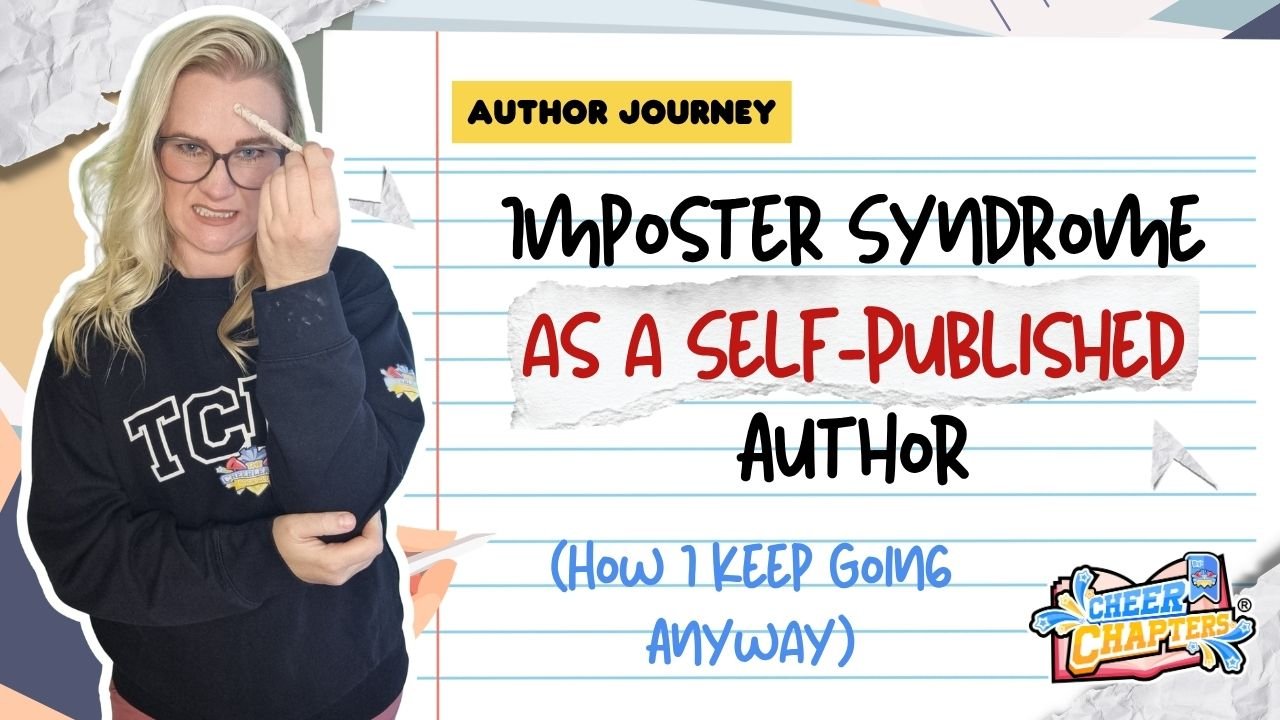
Should I really be publishing these books?
Are they good enough? Will children actually enjoy them? What if readers find mistakes? What if everybody else thinks they could have done it better?
Those are the questions that have been running through my head as I’ve worked towards publishing the Cheer Diaries series.
I decided to talk about imposter syndrome while I was still right in the middle of it. I didn’t want to wait until I had moved past it and could tell the story from a safe distance.
Hopefully, one day I’ll look back and realise how far I’ve come. Right now, though, this is what it really feels like.
“Should I Even Be Doing This?”
Self-publishing involves so much more than writing a story.
There’s editing, proofreading, illustrations, cover design, interior formatting and creating different versions of each book. Then there’s the website, marketing, social media, events, photographs and actually convincing people that your book exists.
Every part of the process seems to introduce a brand-new opportunity to question yourself.
Am I doing this correctly? Does the cover look professional? Is the language right for the intended age group? Will children understand it? Is it funny enough? Is the whole thing actually any good?
Sometimes those questions are useful.
When my first proof copies arrived, I looked at the covers and knew I could do better. I wasn’t criticising myself for the sake of it; I could see specific things that needed improving.
So I sat down, changed them and produced covers I felt much more confident about.
That kind of questioning can help improve the work. The difficulty comes when “Can I make this better?” turns into “Who am I to be doing this at all?”
ADHD, Dyslexia and a Lifetime of Being Corrected
I think a lot of my own imposter syndrome comes from having ADHD and dyslexia.
Words, language, reading and writing have never felt completely straightforward to me. My brain often moves faster than my speech. I call things by the wrong name, leave out words or say something in a way that isn’t quite right.
Even now, I’m corrected regularly by my family, athletes and people I work with. It is part of my everyday life, and I’m very conscious of it.
When I was younger, I noticed it more in my writing. I was also incredibly shy and wouldn’t have imagined speaking publicly or recording myself for people to watch.
Now I’m trying to write and publish books.
There’s a part of my brain that looks at that combination and asks how somebody who struggles with words can possibly call herself an author.
How can I write a story that is good enough to publish? How can I trust that somebody will enjoy it without focusing on every mistake—or thinking I should have done better?
Comparing My Beginning With Somebody Else’s Success
Social media doesn’t always help.
It is very easy to see other authors talking about their sales, successful launches and all the shops stocking their books. You see the polished covers, impressive numbers and exciting announcements.
You don’t necessarily see everything that happened before those moments.
When you’re at the beginning of your own journey, it can feel as though everybody else is miles ahead. You start comparing your unfinished work with somebody else’s success story.
Then come the endless spam emails promising marketing, reviews or instant results, all of which seem designed to remind you that there are another 400 things you apparently aren’t doing.
It can make you wonder whether there is any point in continuing.
Nobody Else Has Your Brain
When I find myself thinking that other people could do this better, I try to remember one important thing:
Nobody else has my brain.
Nobody else has exactly my imagination, experiences or way of looking at a story. Somebody else could write a children’s cheerleading series, but they wouldn’t create exactly the same characters or stories that I would.
The same is true for every writer and creator.
Your ideas will never come out exactly like somebody else’s because they haven’t lived your life or imagined the world in the way you have.
I know there are children who will love these stories. If I let imposter syndrome stop me from publishing them, those children never get the chance to decide for themselves.
I would rather put the books into the world, listen to feedback and keep improving than abandon them because I’m afraid somebody might not like them.
Turning a Solo Project Into a Team Effort
One of the most helpful things I’ve done is ask other people for honest feedback.
I’ve given the books to children, parents, cheer coaches and gym owners. I’ve asked them about the stories, language, design and overall feeling of the books.
Are the cheerleading details correct? Does the wording make sense? Did you notice any mistakes? Is there anything I should add, remove or change? Do children actually enjoy reading them?
Their feedback gives me information I can use to make the books stronger. It also makes self-publishing feel less lonely.
The stories might begin inside my head, but I don’t have to make every decision in complete isolation. Having trusted people involved makes the process feel more like a team activity.
It doesn’t remove every doubt, but it helps me trust that I’m not simply guessing my way through everything alone.
Keep Moving Forward
The other thing that helps is continuing to make plans.
Interior formatting was one of the stages where my imposter syndrome became particularly loud. When one task started feeling overwhelming, I also worked on practical plans for what came next.
I booked a photoshoot. I thought about how to make it fun for the children involved. I planned website updates, events and future jobs.
Those steps reminded me that the difficult task in front of me wasn’t the entire journey.
Sometimes “keep going” doesn’t mean forcing yourself to stare at the same problem for another five hours. It can mean completing one useful task that keeps the whole project moving.
I Still Don’t Always Feel Like an Author
At the time I first shared these thoughts, I had already self-published five books: four stories and a journal. I was also preparing the first three Cheer Diaries books for publication.
Despite that, I still didn’t really think of myself as an author.
I thought of myself as a storyteller with a wild imagination.
I knew people who seemed naturally gifted at arranging words beautifully, and I didn’t believe that person was me. That gap between what I thought an author was supposed to be and how I saw myself fed directly into my imposter syndrome.
But perhaps being an author isn’t about feeling completely confident in every sentence.
Perhaps it is about having a story, doing the work, accepting help, listening to feedback and being brave enough to let somebody read it.
Keep Going Anyway
I don’t have a magical answer for getting rid of imposter syndrome.
What I do know is that stopping would guarantee that nobody ever gets to experience these stories. Continuing gives them a chance.
So I’m going to keep asking useful questions. I’m going to keep improving what can be improved, asking for feedback and taking the next step.
I may still question whether I’m a “real” author.
I’m publishing the books anyway.
If you have experienced imposter syndrome as an author, creator or business owner, I would love to know what helped you. You can find my books and contact me through The Cheerleader Book Club.
-
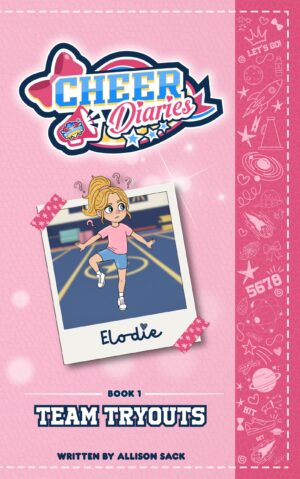
Book 1: Team Tryouts | A Cheer Diaries Story
Price range: $9.99 through $29.99 -
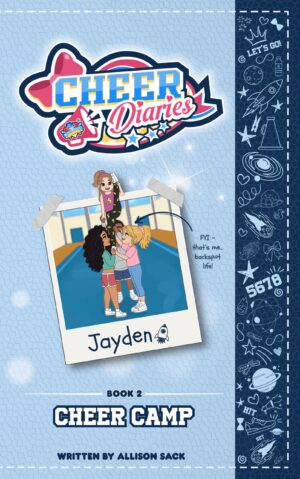
Book 2: Cheer Camp | A Cheer Diaries Story
Price range: $9.99 through $29.99 -
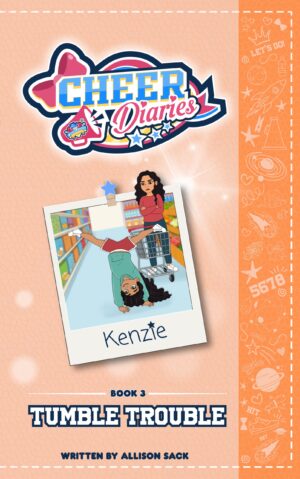
Book 3: Tumble Trouble | A Cheer Diaries Story
Price range: $9.99 through $29.99 -
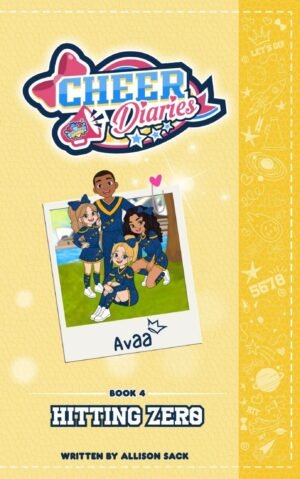
Book 4: Hitting Zero | A Cheer Diaries Story
Price range: $9.99 through $29.99

Books, Resources & Helpful Links
If you’d like to explore more — books, downloads, or tools I personally use — you’ll find everything below. Some links are affiliates and help support the blog at no extra cost to you. I only share things I genuinely use or recommend. Content on this website is shared for informational and entertainment purposes only and does not replace professional advice. Please seek appropriate qualifications or professional guidance for coaching, training, business, or financial decisions.
Allison xx
Author Exclusive Shop
https://thecheerleaderbookclub.com/shop/
Buy on Amazon
https://mybook.to/tcbcstore
The Cheer Brilliance Blueprint
Map out a positive, confident cheerleading journey at home — because a happy cheerleader is a powerful one.
• Findaway Voices (Audiobooks)
https://www.voicesbyinaudio.com/
• ISBNs (AU) – Thorpe & Bowles
https://www.myidentifiers.com.au/
• BookVault (Print-on-Demand)
https://bookvault.app/join-the-team/
• ALLi – Alliance of Independent Authors
https://www.allianceindependentauthors.org/members/join?affid=20523
• Free ISBN Barcode Generator
https://kindlepreneur.com/isbn-bar-code-generator/
• IngramSpark (Global Distribution)
https://www.ingramspark.com/
• Publisher Rocket (Keyword Research)
https://cheerchapters–rocket.thrivecart.com/publisher-rocket/
• Amazon KDP
https://kdp.amazon.com/
• BookLinker (Universal Amazon Links)
https://booklinker.com/
• Namecheap (Domains & Email)
https://www.namecheap.com/
• Hostinger + WordPress
https://hostinger.com?REFERRALCODE=GL4THECHEXI1
• Fiverr (Freelancers & Creatives)
https://www.fiverr.com/
• Canva (Design & Graphics)
https://www.canva.com/
QuickBooks (Accounting)
https://quickbooks.intuit.com/
RedCircle (Podcast Hosting & Distribution)
https://app.redcircle.com/sign-up
• Buffer (Scheduling)
https://buffer.com/join/66c386f3a7c32ef283f3be733cb8623df06b16fe81ceada6911ac8b57829ed3b
• Opus Clip (Short-Form Video Clips)
https://www.opus.pro/?via=760090